
Remembering Claudia Rodríguez
We, Monsters

Chilean poet, performer, activist, Claudia Rodríguez passed away on Saturday, November 29. She was 57 years old. Claudia would call herself as a monstrous poz travesti, with crooked teeth and a biting wit, a divine, insatiable appetite for finding desire in the crevices of humanity. She was a friend and an inspiration to me and many others.
I first met Claudia in 2015, after having been invited to give lectures in Santiago and Valparaíso. In Santiago I was able to connect with Juan Pablo Sutherland, whom I had met a few years earlier in grad school at UT Austin. Juan Pablo told me I had to go to see this performance. I had to.
I remember walking up to the theater with him, sitting down at a table at stage right alongside the photographer Paz Errázuriz, and being completely entranced by this monstrous Marylin, the center of the show, in white, asking us, “Quieren show?”
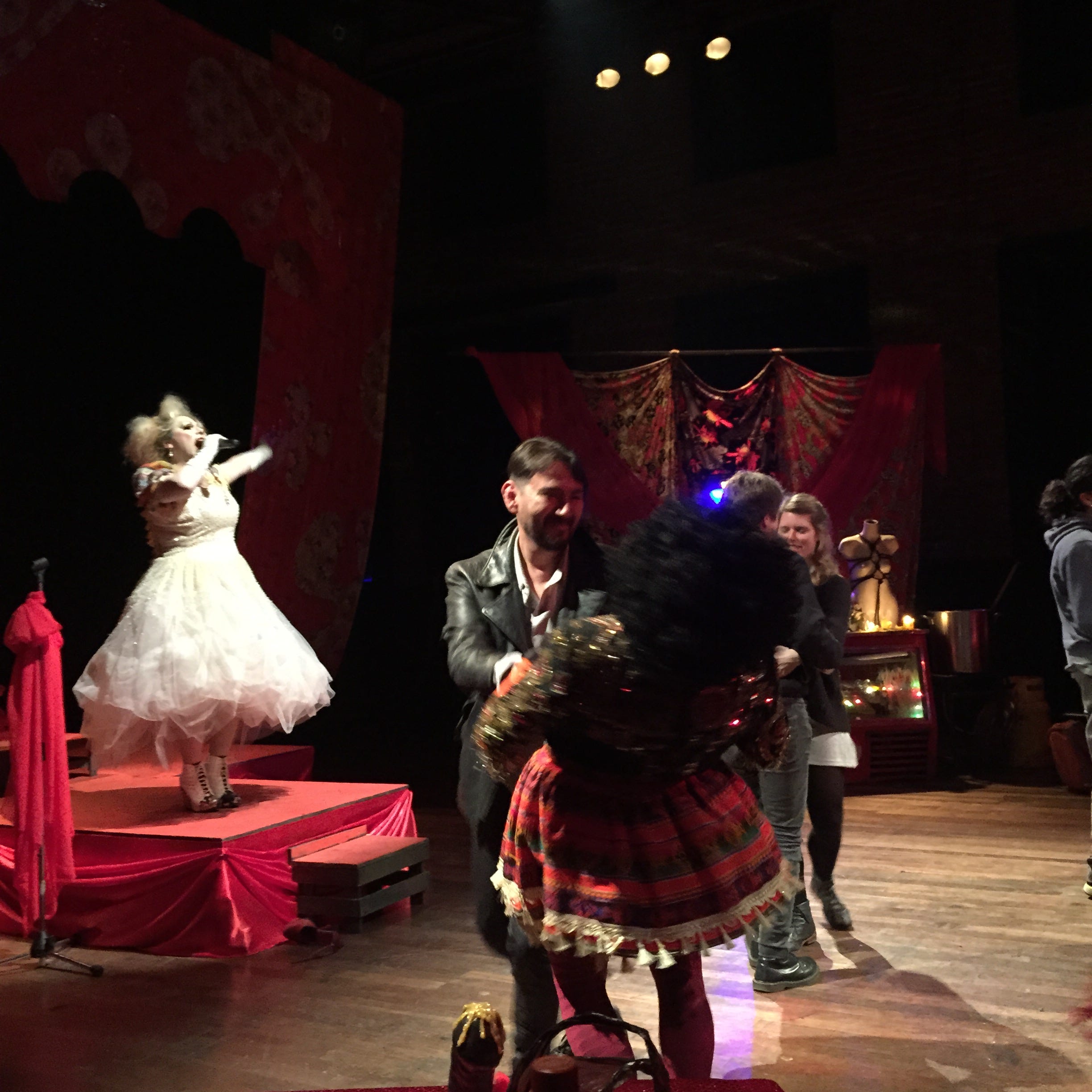
She was a dynamic performer. Commanding and open. Her poetry formed the basis of much of the theatrical production, which was a raucous baroque, burlesque, cannibalistic, fever dream.
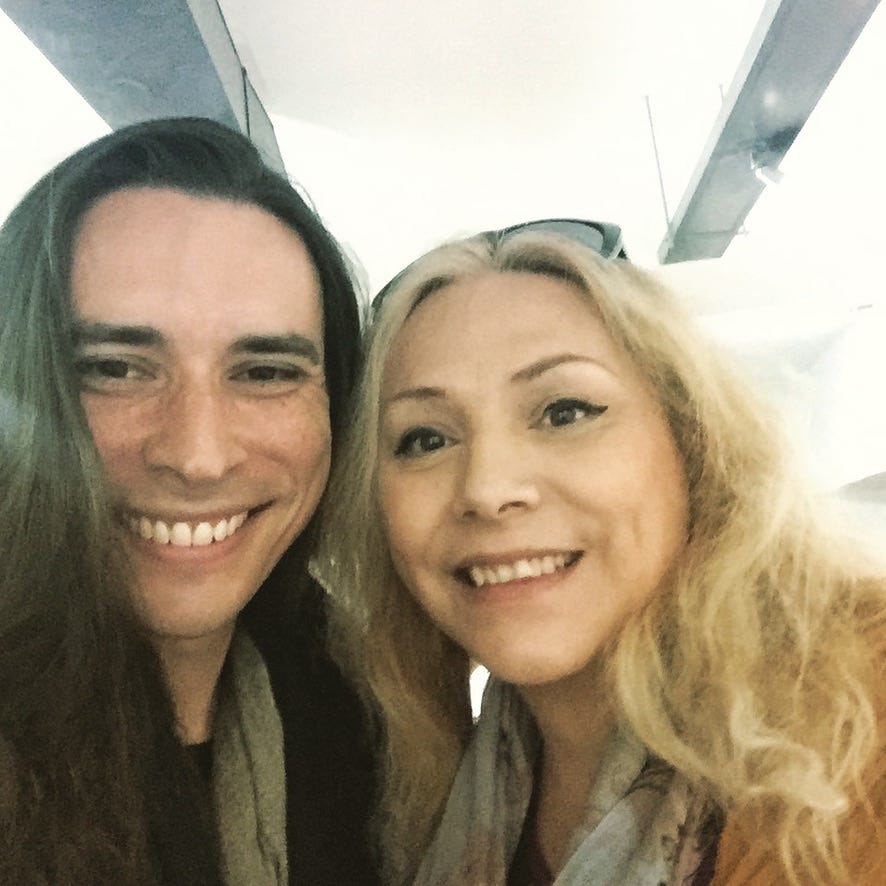
The following year, 2016, we spent time together in the context of the Hemispheric Institute’s Encuentro in Santiago. I remember us having tea near the Cerro Santa Lucía, and her telling me about that performance and what she had been working on. Her poetry. The work of advocating for travesti and trans rights in Chile. The grinding din of neoliberalism. But we laughed and smiled. We took a selfie.
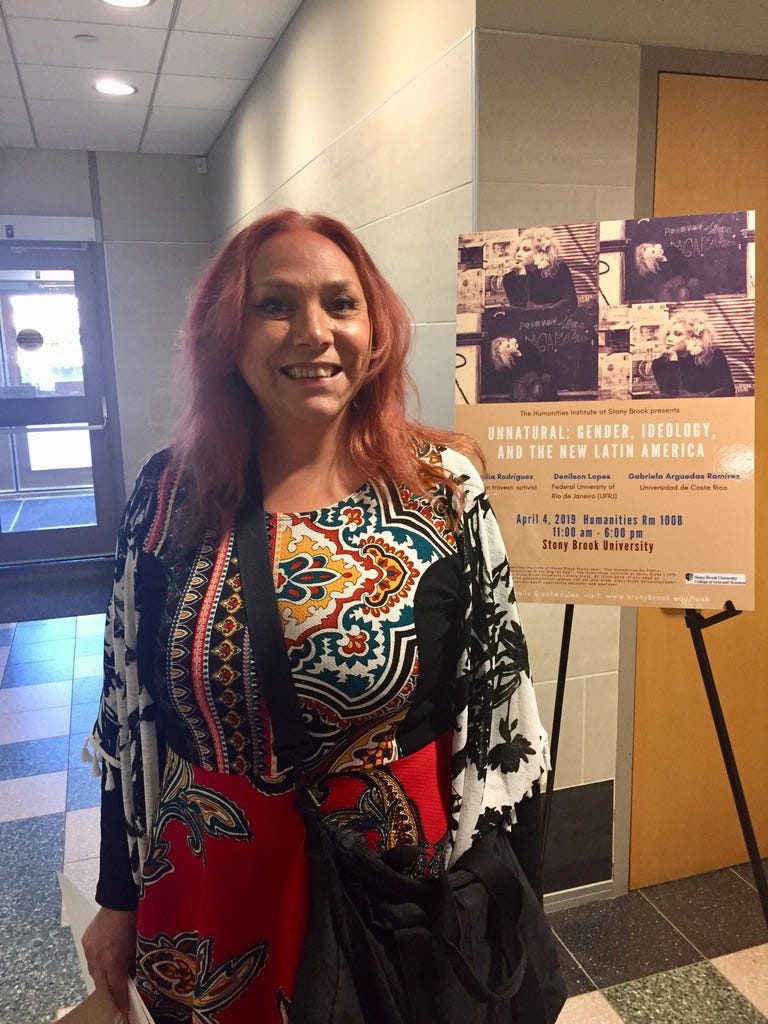
In 2019, I was able to invite Claudia to Stony Brook University, the first time she came to the US, to New York, and to speak directly to the rise of gender-based violence in both contexts. She spoke about fascism and about resistance. She spoke about daring to inhabit the spaces of limitless language, the body in its becomings, its undoings, its monstrosities. It was the early days of the anti gender-ideology movement in Latin America, and she was able to connect those politics, which have only proliferated since then, to the poetics of resistance, defiance, and care.
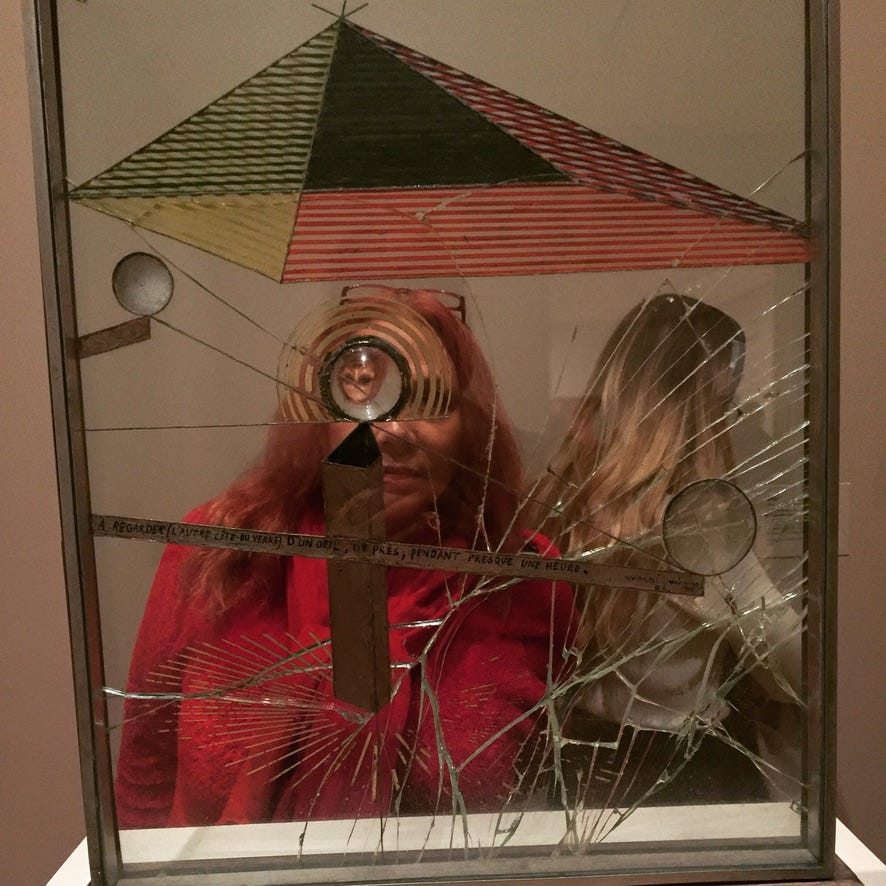
After the symposium at Stony Brook, Claudia stayed with James and me in our apartment for the week. She wanted to see the art at MoMA, so we went.
She wanted to find the place where Marylin Monroe’s skirt had fluttered in the street in her most famous photograph, so we went.
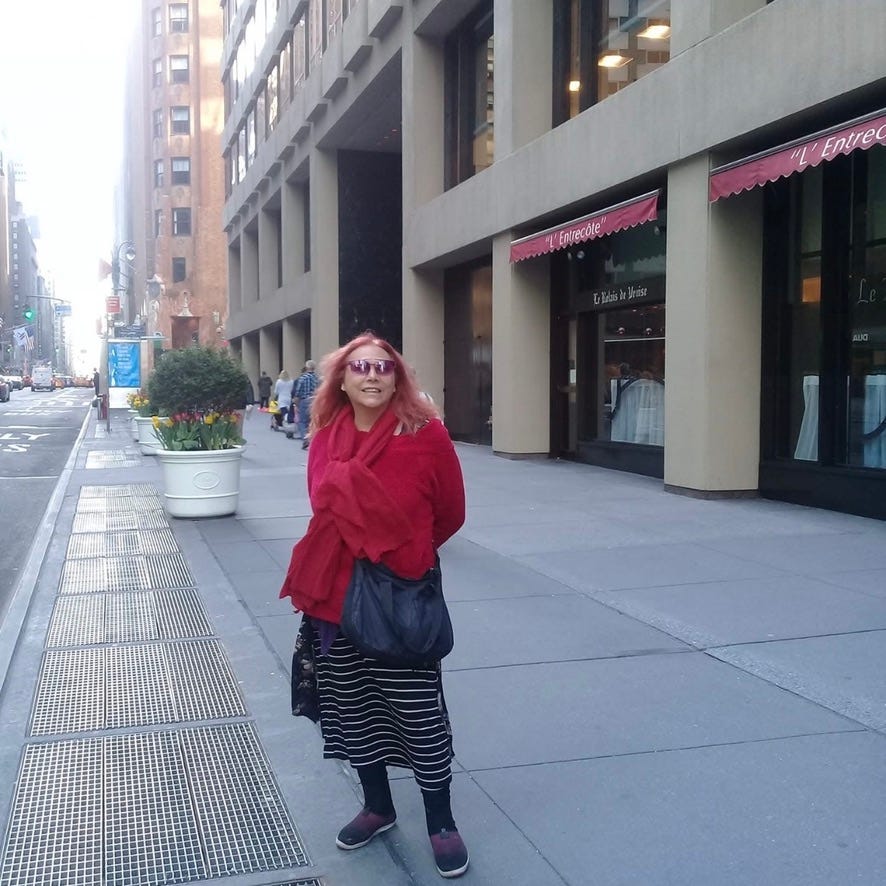
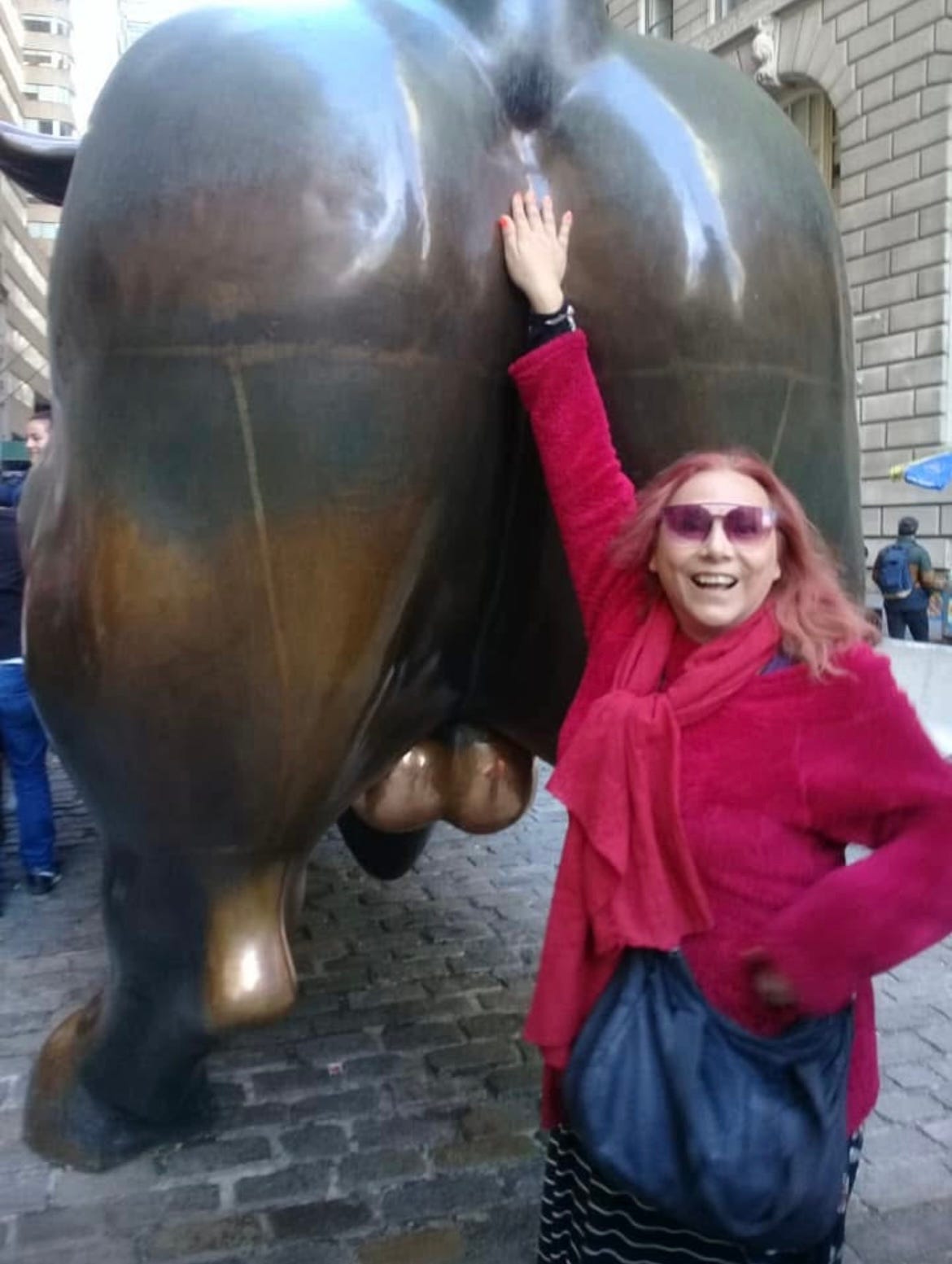
She wanted to go downtown and see the Statue of Liberty, and as we walked, she stopped at the Wall Street bull, that emblem of American greed, to touch not its balls—as all the tourists were—but its asshole, “quiro una foto con el poto,” she said.
After she went back to Chile, I wrote a crónica of her visit titled, “Vengo a hablar de política,” (I have come to talk about politics), which was published in Argentina by Revisita Anfibia. They republished the story this week text in honor of her passing.
In 2020, I had an article about Claudia and the Argentine poet/singer/artist Susy Shock, published in the Latin American Research Review, the first time that journal published anything on trans issues. I would also have that text translated to Spanish, mostly so she could read it, but also as a way of ensuring that work circulated among the various communities that I was engaging with.
The LARR article was later named as the best article of the year in that journal, and as part of the ‘prize’ I was allowed to create a special panel for the Latin American Studies Association conference in 2021, which was held online (Covid). I invited Claudia, along with my friend and collaborator, Diego Falconí, to speak (I had also invited Susy but she wasn’t able to participate) instead of me talking about my own article.
Claudia opened the zoom meeting, smoking a cigarette, as if it was our honor (and it was) to hear her, as if the smoke itself was her audience.
The conversation, the article, and the visit to Stony Brook, all coalesced around a theory of monstrosity that Claudia had been developing for years. It was her work that allowed me to understand the trans poetics of monstrosity, the way the cultural paradigms of Western civilization are interfaces through which the embodiment of alterity shifts and moves and recurs, particularly targeting the bodies of trans people, gender ‘deviant’ subjects, queer people, and racialized people. It was her work that allowed me to see how my own queer Cherokee body had been rendered monstrous by colonial administrations intent on eliminating us. And it was her work that allowed me to articulate the possibility not of resisting that monstrous designation, but inhabiting it, furtively, selectively perhaps, but inhabiting the space of the monster (that polymorphous thing) and staring back at those whose codes and norms and genders and whose fascist repression has always been the surface against which the monstrous comes into relief. The monster is a container, not a given.
Between then and now I haven’t been back to Chile, but Claudia and I would exchange messages now and then, on Instagram and WhatsApp. She asked me to contribute a recording for one of her poetry readings, a reprisal of some of that critical framing of her work, and I was happy to do so. But it has been a few months since we last spoke, and I’m sad about that now.
It’s been a week, and I’m still trying to sort out these feelings. She was not just a public figure or a writer, or even a just a friend. She was all those things. But she was also a driving force for discovering the possibilities of the body. She did not take the body for granted. She cultivated its becomings, its desire. She looked for it everywhere. The desirous body. She saw it in colors and in glances in poetry and in politics.
She was the travesti poet of a generation.
And I can’t say that these feelings, the juncture of loss and distance and rage and understanding, are perhaps, my own body coming to terms with the lingering sense that she will be remembered as a person of incredible acuity, yes, but also, of an abiding generosity, a flowering kindness that, I am certain, she did not give away lightly. So, to have been the recipient of some of her kindness, her wit, her insistence on the silhouettes of bodies in motion, in desirous spirals and blazing arcs, is what I am hoping will remain in me, as the lingering possibility of a future memory, a future body, one in which, we, monstering, meet again.
I was preparing for a presentation on monstering and needed to freshen up on Claudia's poetry when I found this. I am so heartbroken to see these news. Thank you for taking the time to remember her.